
Hot Products
Are Oriental rugs Hand-Knotted?
Views : 1308
Update time : 2022-02-18 14:35:35
The term “Oriental rug” is thrown around quite often. This term can refer to several different styles, but Oriental rugs can only truly be classified as such if they are hand-knotted. Hand knotting is an ancient technique that is largely unchanged from the process used today. These beautiful rugs are works of art and draw attention in any room they’re are placed. Because hand-knotted rugs are made with wool and silk, they are very durable, soft, and stain resistant.
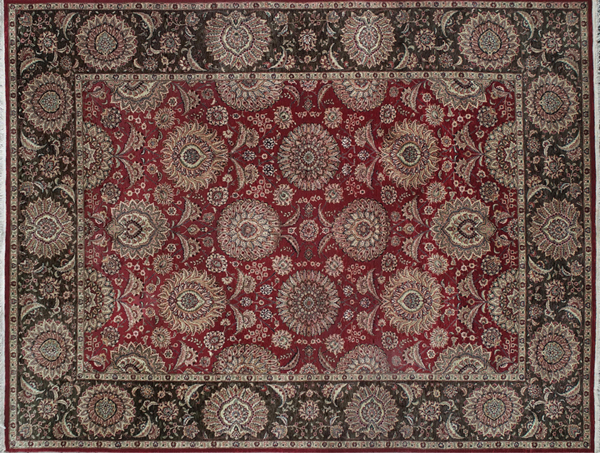
The Knots of Hand-Knotted Rugs
There are three main knots used in hand-knotted rugs.
The Persian knot (Senneh knot)

The Persian knot is asymmetrical and open to one side, which leaves fewer gaps and is less bulky than Turkish knots. Persian knots are most commonly used for intricate designs and floral patterns. Iran, Afghanistan, Pakistan, India, Nepal, Tibet, and China typically use the Persian knot.
The Turkish knot (Ghiordes knot)
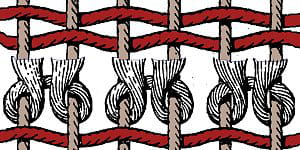
The Turkish knot is symmetrical and leaves two small bumps within each knot on the back of the rug—it ends up looking like a double knot. Turkey, Armenia, Azerbaijan, and northern Iran are more likely to use this type of knot.
The Jufti knot
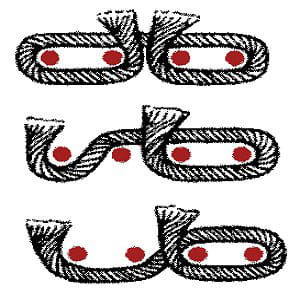
The Jufti knot, or false knot, is tied around four threads instead of two, creating a short cut. The weaver spends less time on a rug when using a Jufti knot, which results in quicker processing time and a lower value and quality.
The number of knots on a hand-knotted rug will determine the value, along with age, design, and material.
The Knots of Hand-Knotted Rugs
There are three main knots used in hand-knotted rugs.
The Persian knot (Senneh knot)
The Persian knot is asymmetrical and open to one side, which leaves fewer gaps and is less bulky than Turkish knots. Persian knots are most commonly used for intricate designs and floral patterns. Iran, Afghanistan, Pakistan, India, Nepal, Tibet, and China typically use the Persian knot.
The Turkish knot (Ghiordes knot)
The Turkish knot is symmetrical and leaves two small bumps within each knot on the back of the rug—it ends up looking like a double knot. Turkey, Armenia, Azerbaijan, and northern Iran are more likely to use this type of knot.
The Jufti knot
The Jufti knot, or false knot, is tied around four threads instead of two, creating a short cut. The weaver spends less time on a rug when using a Jufti knot, which results in quicker processing time and a lower value and quality.
The number of knots on a hand-knotted rug will determine the value, along with age, design, and material.
Related News
Read More >>
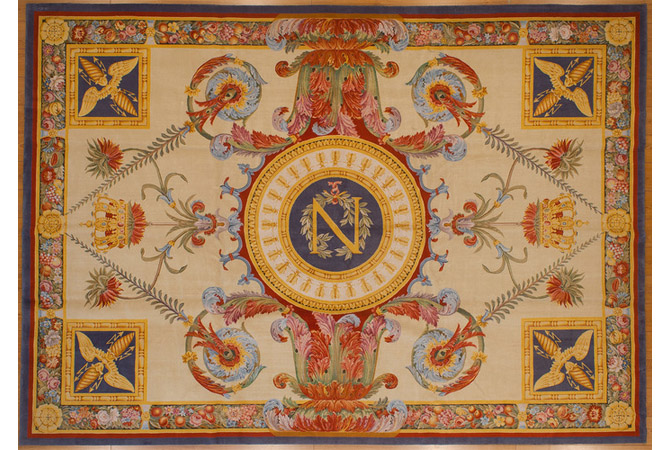 What is savonnerie rug meaning?
Sep .11.2023
A Savonnerie carpet, also known as a Savonnerie rug, refers to a type of luxurious, handwoven carpet or rug that originated in France in the 17th century. The term "Savonnerie" is derived from the French word for soap, "savon," because the original worksh
 Are handmade carpet worth it?
Sep .05.2023
Handmade carpets can be worth it for several reasons, and their value often depends on your preferences, budget, and the specific qualities you are looking for in a carpet. Here are some factors to consider when deciding if a handmade carpet is worth it:
 Celebrate The Chinese New Year
Jan .16.2023
The Chinese New Year holiday is coming. Chengdi Carpet will have a holiday from January 21st to January 27th.
 What are the benefits of handmade silk rugs?
Apr .18.2022
Handmade silk carpet is expensive to be called "soft gold", but why is still loved by more and more people, today we will tell what benefits handmade silk carpet has:
